
Key takeaways
Jump to a section
Compare B-vitamin amounts on the label with the food sources and precautions in this guide. Several B vitamins have authorised EU claims; the exact wording for B6 and B12 is shown below.
There is no authorised EU health claim saying that B vitamins give a noticeable lift in energy beyond normal needs. The NHS says that vitamin B12 is not found naturally in foods such as fruit, vegetables and grains, so vegans may not get enough of it.
What the EU-authorised B vitamin claims cover
The exact EU-authorised wording for vitamin B6 and vitamin B12 is shown in the boxes above. Thiamin (B1), riboflavin (B2), niacin (B3), pantothenic acid, biotin and folate have their own entries in the EU Register of nutrition and health claims.
B vitamins are not stimulants and are not caffeine. There is no authorised EU health claim saying that adding more of a B vitamin speeds up energy metabolism.
B vitamins and people who are not deficient
There is no authorised EU health claim saying that B vitamins give a noticeable lift in energy, endurance or strength to someone who is not deficient. The NHS says that you should be able to get all the thiamin, riboflavin, vitamin B6 and vitamin B12 you need by eating a varied and balanced diet, and that if you take supplements you should not take too much as this might be harmful.
Who is actually at risk of running low
- Vegans may not get enough vitamin B12: the NHS says it is not found naturally in foods such as fruit, vegetables and grains.
- Older adults: the NHS says it becomes more difficult to absorb vitamin B12 as you get older.
- Folate in pregnancy is a separate conversation with a doctor or midwife, not something to self-manage with a sports supplement.
Food sources worth knowing
Food sources of B vitamins include:
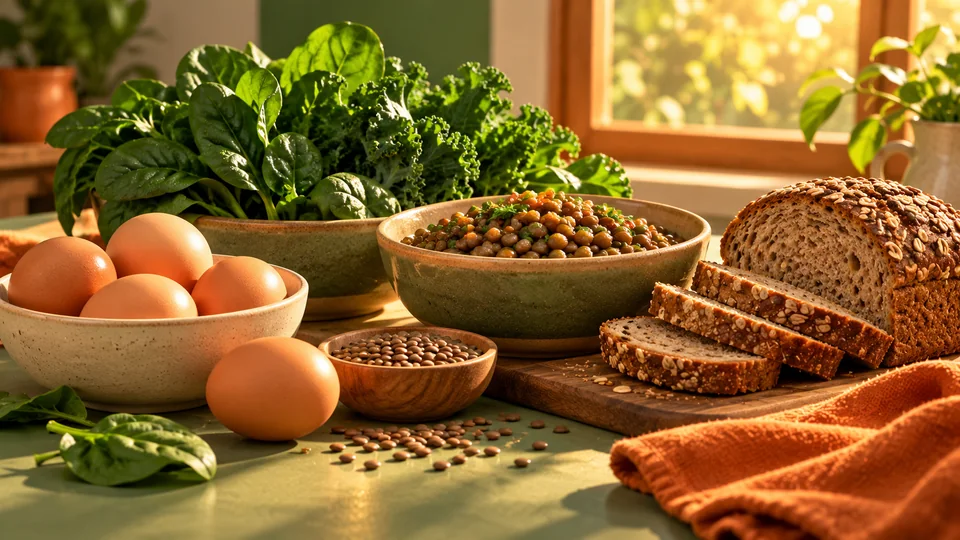
- Meat, poultry, fish and eggs supply B12, B6, niacin and riboflavin.
- Dairy products contribute B12, riboflavin and pantothenic acid.
- Wholegrains, legumes and potatoes are solid sources of thiamin and B6.
- Leafy green vegetables, legumes and fortified cereals supply folate.
- Nuts, seeds and avocado contribute biotin and pantothenic acid.
- Fortified plant milks, nutritional yeast and fortified cereals are the main reliable B12 sources for anyone eating no animal products at all.
Do harder training blocks raise how much B-complex you need?
No EU-authorised claim links training load to a higher B vitamin requirement. The NHS says that you should be able to get all the B vitamins you need by eating a varied and balanced diet.
When a B-complex or B12 supplement makes sense
A supplement is sold to cover an actual gap, not as an energy booster. These are the situations in which people most often consider one:
- You eat a vegan or largely plant-based diet and do not consistently eat fortified foods.
- You are over 50 and want a straightforward way to cover reduced B12 absorption.
- Blood tests have flagged a low B12 or folate level.
- Your diet is genuinely restrictive for medical, religious or personal reasons.
Outside of those situations, a B-complex is a product to compare on the amount of each vitamin per serving and on price per serving.
Signs worth getting checked, not guessed at
The NHS says that a lack of vitamin B12 could lead to vitamin B12 deficiency anaemia and that a lack of folate could lead to folate deficiency anaemia, and the NHS iron deficiency anaemia page says a GP blood test will also check for these. If you suspect a deficiency, ask your GP rather than guessing from symptoms or from how a supplement feels.
The bottom line
Several B vitamins have EU-authorised claims; the exact wording for vitamin B6 and vitamin B12 is shown in the boxes above. There is no authorised EU health claim saying that more B vitamins mean more energy for someone who is not deficient. If you are vegan, vegetarian, older, or eat a narrow diet, you can ask a GP or dietitian whether a B12 or B-complex supplement is relevant for you.
Source: NHS – Vitamin B, NHS – Iron deficiency anaemia, EU Register of nutrition and health claims
Frequently asked questions
Do B vitamins actually give you more energy?
Several B vitamins carry an EU-authorised energy-metabolism claim — shown in the box above for B6 and B12, the two with verified wording so far. Some B vitamins also carry a separate authorised claim about the reduction of tiredness and fatigue. Folate does not carry the energy-metabolism claim. There is no authorised EU health claim saying that extra B vitamins give a noticeable lift in energy beyond normal needs.
Who is most at risk of low vitamin B12?
The NHS says that vegans may not get enough vitamin B12, because it is not found naturally in foods such as fruit, vegetables and grains, and that it becomes more difficult to absorb vitamin B12 as you get older.
Can I get enough B vitamins from food alone?
The NHS says that you should be able to get all the B vitamins you need by eating a varied and balanced diet. It also says that vegans may not get enough vitamin B12.
Should athletes take a separate B-complex supplement?
Only if a GP, dietitian or blood test points to a gap, for example a plant-based diet without fortified foods. No EU-authorised claim links training load to a higher B vitamin requirement.
Are B vitamins the same as a stimulant like caffeine?
No. B vitamins are not stimulants and are not caffeine. Check an energy drink label for the caffeine content in milligrams and for the amount of each B vitamin.