
Jump to a section
TL;DR: How Much Protein Per Day
- Research figure: Morton et al. (2018) reported a break point of 1.62g/kg/day for total protein intake with protein supplementation during resistance training (95% CI 1.03 to 2.20, not statistically significant).
- Cutting (fat loss): Stokes et al. (2018) say athletes on energy-restricted diets should focus first on fulfilling daily protein requirements (1.6–2.4g/kg/day).
- Per meal: In the practical recommendations of their review, for individuals in energy balance, Stokes et al. (2018) advise about 0.4g/kg of body mass of protein to maximally stimulate muscle protein synthesis following a period of rest or exhaustive resistance exercise.
Introduction
Protein figures can refer to label reference values, research intakes or a personal target. This guide distinguishes those uses, reviews the cited studies and shows how the per-kilogram calculations work.
The figures below come from the studies cited on this page.
1. The Regulatory Reference Value vs Research Intakes
The EU’s Nutrient Reference Value (NRV) for protein applies to an average adult. It is separate from the research intakes covered in the sections below.
2. The Morton et al. (2018) Meta-Analysis and Worked Examples
The EU-authorised wording for protein is shown in the box at the end of this page. As reported, a 2018 meta-analysis of 49 randomised controlled trials (1,863 participants) of protein supplementation during resistance training (Morton et al. 2018) reported that, with protein supplementation, total protein intakes above about 1.6 g/kg/day did not further contribute to resistance-training-induced gains in fat-free mass. Its break-point analysis (42 study arms, 723 participants) gave 1.62 g/kg/day with a 95% confidence interval of 1.03 to 2.20 and was not statistically significant (p = 0.079).
Because that confidence interval was wide, the authors wrote that it may be prudent to recommend about 2.2g of protein per kilogram per day for people seeking to maximise resistance-training-induced gains in fat-free mass.
Calculation examples with 1.6 and 2.2g/kg/day, rounded figures from the Morton et al. (2018) meta-analysis above (not individual recommendations):
- 70kg athlete training 4x per week → 112–154g protein/day
- 85kg athlete training 5x per week → 136–187g protein/day
- 60kg female athlete training 3x per week → 96–132g protein/day
3. Protein During a Calorie Deficit (Fat Loss)
Stokes et al. (2018) describe a study by Pasiakos et al. in which participants spent 21 days in a 40% energy deficit (30% caloric restriction plus a 10% increase in aerobic exercise). Only the participants consuming 1.6 g/kg/day and 2.4 g/kg/day preserved their anabolic sensitivity to protein; the group consuming the RDA (0.8 g/kg/day) had a suppressed muscle protein synthesis response after the deficit. Even the participants consuming more than the RDA experienced significant losses of lean body mass.
Stokes et al. (2018) conclude that, akin to athletes in energy balance, athletes subjected to energy-restricted diets should focus primarily on fulfilling daily protein requirements (1.6–2.4g/kg/day), and only then on other variables of protein supplementation (protein source and timing).
4. Does Spreading Protein Across Meals Matter?
A complete protein supplies all the essential amino acids, leucine included. In the practical recommendations of their review, for individuals in energy balance, Stokes et al. (2018) advise about 0.4g/kg of body mass of protein to maximally stimulate muscle protein synthesis following a period of rest or exhaustive resistance exercise.
The figures on this page are daily totals. Many people spread their intake across 3–5 meals or snacks throughout the day rather than relying on very large single servings.
5. What Counts Toward Your Protein Target?
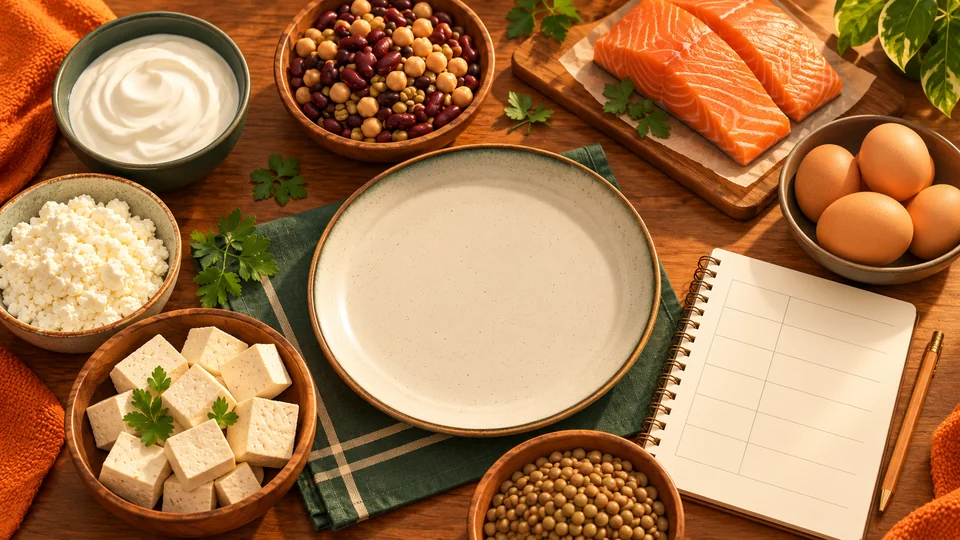
All dietary protein sources count: meat, fish, eggs, dairy, legumes, tofu, tempeh, and protein powders. Animal proteins and well-formulated plant protein blends are sources with complete amino acid profiles and high leucine content. Protein powders are one way to add protein when whole food sources fall short.
6. Is High Protein Intake Safe?
If you have kidney disease, consult a doctor before significantly increasing protein intake.
Conclusion
The Morton et al. (2018) meta-analysis reported a break point of 1.62g of protein per kilogram of bodyweight per day for total intake with protein supplementation (95% CI 1.03 to 2.20), and its authors wrote that it may be prudent to recommend about 2.2g/kg/day for people seeking to maximise resistance-training-induced gains in fat-free mass. For athletes on energy-restricted diets, Stokes et al. (2018) refer to daily protein requirements of 1.6–2.4g/kg/day. The EU-authorised wording for protein is shown below.
Sources & further reading
- Morton, R.W., et al. (2018). A systematic review, meta-analysis and meta-regression of the effect of protein supplementation on resistance training-induced gains in muscle mass and strength in healthy adults. British Journal of Sports Medicine.
- Stokes, T., et al. (2018). Recent Perspectives Regarding the Role of Dietary Protein for the Promotion of Muscle Hypertrophy with Resistance Exercise Training. Nutrients.
- EU Register of Nutrition and Health Claims — Protein claims.