
Key takeaways
Jump to a section
Use this guide to find the main creatine-monohydrate topics: product formats, quantities, research and precautions. Follow the links for a specific question, and read the authorised EU wording separately from product marketing.
Think of this page as the map. Each section gives you the honest essentials and then points you to a deeper cluster guide if you want the full detail.
What creatine monohydrate is and how it works
Creatine is a compound your body already makes and stores, mostly in your muscles, and you also get small amounts from foods like red meat and fish. Chemically, creatine monohydrate is simply creatine bound to one water molecule — the original form, and the one the ISSN position stand on creatine describes as the most extensively studied for use in nutritional supplements. When people talk about “a creatine supplement,” they are almost always talking about monohydrate, and for good reason: it’s the form used in the overwhelming majority of the research.
Inside your muscle cells, creatine is stored as phosphocreatine, which your body uses to regenerate adenosine triphosphate (ATP), the fast energy currency burned during brief, explosive efforts.
Many quality creatine products use a micronized creatine monohydrate, which simply means the powder is milled into finer particles so it mixes more smoothly and is easier to drink.
The authorised claim
Here is where we stay precise, because supplement claims in the EU are tightly regulated and most of what you read online is not. Creatine has an authorised claim under EU rules. The exact EU-authorised wording is shown in the box on this page.
Notice what the claim does not say. It is about performance in repeated high-intensity bursts. We won’t dress it up as anything more. For the full evidence breakdown, see our creatine research review, part of the CapyFuel evidence library. If you have a health condition or take medication, speak to a healthcare professional before starting any supplement — this guide is information, not medical advice.
How to take creatine monohydrate: dosing
The ISSN position stand on creatine (Kreider et al., 2017) says that once muscle creatine stores are fully saturated, they can generally be maintained by ingesting 3–5 g/day, with some studies indicating that larger athletes may need as much as 5–10 g/day.
The optional loading phase
Some people choose to start with a short loading phase — a higher daily intake split across the day for the first several days — before dropping back to a daily maintenance amount. Loading is optional. The ISSN position stand on creatine describes ingesting 5 g of creatine monohydrate four times daily for 5–7 days as the most effective way to raise muscle creatine stores, and taking 3 g/day for 28 days as an alternative protocol, with a more gradual rise in muscle creatine content that may therefore have less effect on exercise performance and/or training adaptations until stores are fully saturated.
We break down the numbers, the trade-offs, and exactly how to structure a loading phase in our dedicated creatine dosage guide, including how the serving size on a label translates to a real scoop.
Timing and consistency: when to take creatine
The honest answer to “when should I take creatine?” is: whenever you’ll reliably remember to. Morning coffee, post-workout shake, with dinner — pick the anchor that sticks.
That said, there are sensible nuances around training days, rest days, and pairing creatine with a meal or your post-workout protein. If you want to optimise the small stuff once you’ve nailed the daily habit, our creatine timing guide covers how to take creatine around your sessions without overthinking it.
Common creatine questions
Three questions come up again and again about creatine.
Does creatine make you “hold water”?
The ISSN position stand on creatine says that, like carbohydrate, creatine monohydrate has osmotic properties that help retain a small amount of water.
Does creatine cause hair loss?
This worry traces back to a single small study that measured a hormone marker; hair loss itself was not measured in that study.
Is creatine bad for your kidneys?
The ISSN position stand on creatine (Kreider et al., 2017) states that there is no compelling scientific evidence that short- or long-term use of creatine monohydrate (up to 30 g/day for 5 years) has detrimental effects on otherwise healthy individuals. We don’t make medical guarantees: if you have any kidney concern or existing health condition, talk to a healthcare professional before starting.
We tackle these and more — calmly and with the receipts — in our creatine myths guide.
Monohydrate vs other forms of creatine
Walk down any supplement aisle and you’ll meet creatine HCL, buffered creatine, creatine ethyl ester, and a parade of “advanced” formulas, usually at an advanced price. Here’s the short version: the ISSN position stand on creatine says clinical evidence has not demonstrated that forms such as creatine citrate, creatine serum, creatine ethyl ester, buffered creatine or creatine nitrate promote greater creatine retention than creatine monohydrate.
If you’re curious how the alternatives compare — solubility, dosing, value — our monohydrate vs other forms guide sets them side by side.
Creatine for women
Creatine is not a “men’s” supplement.
We address the specific questions women most often ask — including bloating and “bulkiness” — in our creatine for women guide.
Creatine and caffeine: do they clash?
Some people say that caffeine “cancels out” creatine. Many pre-workout products contain both, and many people have their coffee and take their creatine on the same day. If you want to be sure, you can take the two at different times of day. There is no authorised EU health claim for caffeine, so we make no statement here about what it does.
If you like a strong pre-session caffeine hit and want to be sure you’re getting both right, our creatine and caffeine guide explains how to stack them sensibly — and how to keep creatine consistent regardless of when you caffeinate.
How to use creatine monohydrate day to day
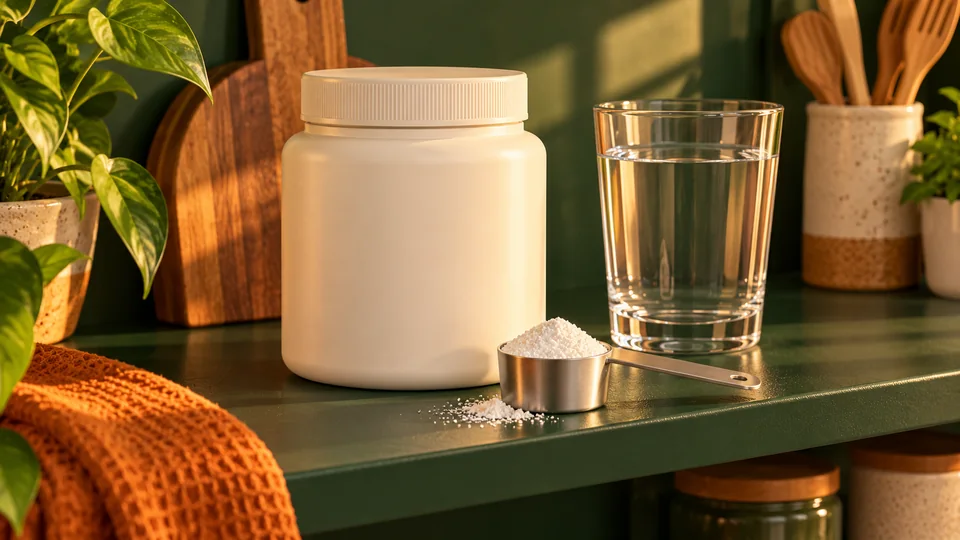
A good plain, unflavoured micronized creatine monohydrate is deliberately simple: no flavourings, no fillers, nothing to get in the way. Stir one serving into water, juice, or your post-workout protein shake, and drink. Because it’s unflavoured, it disappears into whatever you’re already drinking.
A practical routine: pick a consistent moment that fits your life, and keep the tub somewhere you’ll see it. If you’re pairing creatine with a protein routine — our whey protein pillar guide is the companion read.
Buying creatine in Malta and Cyprus
If you train in Malta or Cyprus, getting a reliable creatine supply shouldn’t be a treasure hunt — our Malta and Cyprus price trackers show what local retailers charge today, so you can keep your creatine supply consistent without raiding holiday luggage allowances or paying mystery import fees. We cover local delivery, what to look for on a label, and how to avoid overpriced “advanced” formulas in our buying creatine in Malta & Cyprus guide. To see how individual products score on what their labels declare, read our creatine reviews.
CapyFuel compares prices from retailers rather than selling anything itself. Compare what local retailers charge for creatine monohydrate in Malta right now, so you know what a fair price looks like when it does.
Authorised EU health claim wording and conditions of use are published in the EU Register of nutrition and health claims made on foods: ec.europa.eu — EU Register of health claims.
Explore more: dig into our whey protein pillar guide.
Frequently asked questions
How much creatine should I take per day?
The ISSN position stand on creatine (Kreider et al., 2017) says that once muscle creatine stores are fully saturated, they can generally be maintained by ingesting 3–5 g/day, with some studies indicating that larger athletes may need as much as 5–10 g/day. The exact EU-authorised wording is shown in the box on this page.
Do I need a loading phase?
No, a loading phase is optional. It uses a higher intake for the first several days. The ISSN position stand on creatine describes ingesting 5 g of creatine monohydrate four times daily for 5–7 days as the most effective way to raise muscle creatine stores, and taking 3 g/day for 28 days as an alternative protocol, with a more gradual rise in muscle creatine content that may therefore have less effect on exercise performance and/or training adaptations until stores are fully saturated.
Is creatine monohydrate better than other forms?
The ISSN position stand on creatine describes creatine monohydrate as the most extensively studied form for use in nutritional supplements, and says clinical evidence has not demonstrated that other forms (citrate, serum, ethyl ester, buffered, nitrate) promote greater creatine retention.
When is the best time to take creatine?
Whenever you'll reliably remember. Pick a consistent anchor, such as your morning drink or post-workout shake, and stick to it.
Can women take creatine monohydrate?
Yes. Creatine is not a men's-only supplement. The exact EU-authorised wording is shown in the box on this page. The unflavoured format suits any routine.
Is creatine safe?
The ISSN position stand on creatine states that there is no compelling scientific evidence that short- or long-term use (up to 30 g/day for 5 years) has detrimental effects on otherwise healthy individuals. We don't make medical guarantees, though. If you have a health condition or take medication, consult a healthcare professional before starting any supplement.